Menu and Prices Guide
When checking a menu, focus on ingredients, portion sizes, and prices to spot allergens and fit your budget.
Understand pricing styles like charm or tiered pricing to see why some items cost more.
Compare item sizes and ingredients for the best value, and watch for extra charges like add-ons or split fees. Choosing seasonal or local options can save you money.
Adjust your order by sharing or skipping extras to stay within budget.
Keep going, and you’ll discover smart ways to enjoy affordable meals that suit your preferences.
Key Takeaways
- Scan menus for ingredient details, portion sizes, and prices to identify allergens, preferences, and budget alignment.
- Compare price per ounce and portion size to assess the best value beyond just the price tag.
- Recognize pricing styles like charm pricing or tiered pricing to understand cost perception.
- Account for extra charges like add-ons, cover fees, or split fees to avoid unexpected costs.
- Use budget-friendly strategies such as choosing smaller portions, sharing dishes, or skipping extras to save money.
How to Read a Menu and Spot Key Details
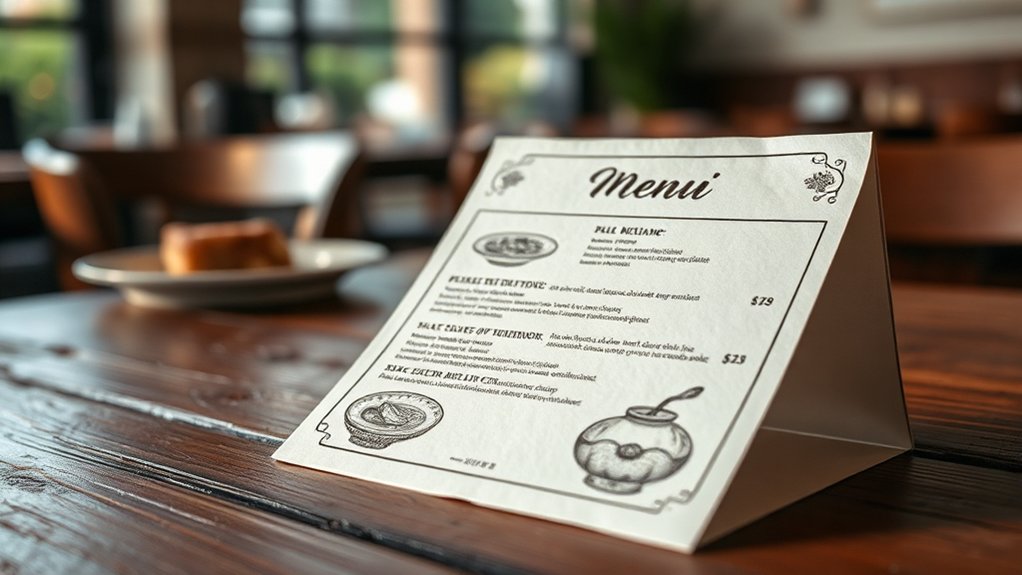
When you look at a menu, your eyes should quickly scan for key details like ingredients, portion sizes, and prices. Doing this helps you make an informed choice without feeling overwhelmed.
Start by checking the list of ingredients to spot any items you might be allergic to or simply don’t enjoy. This also gives you a feel for the dish’s flavor profile.
Next, glance at portion sizes, which are often indicated by descriptions such as “small,” “half,” or “family size.” Knowing this prevents surprises when your plate arrives.
Finally, note the prices to verify the dish fits your budget, but don’t just focus on the cheapest option. Sometimes paying a bit more guarantees better quality or a more filling meal.
Keep an eye out for any symbols or notes indicating specials, dietary info, or chef recommendations. By honing in on these details, you’ll navigate menus with ease and confidence.
How to Understand Different Menu Pricing Styles
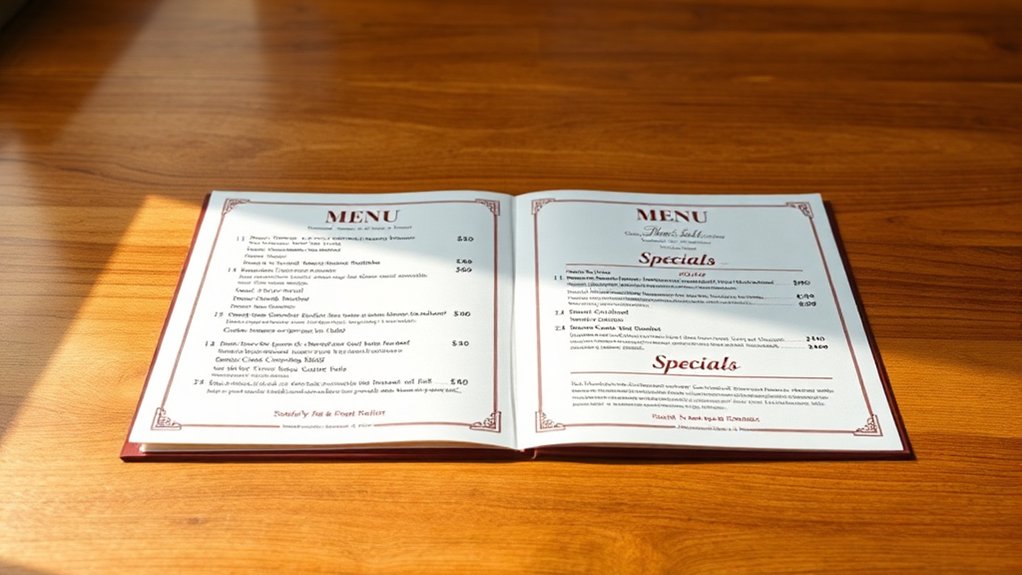
Noticing prices on a menu is just the start of understanding how restaurants present their costs. Different pricing styles can really influence your perception and choices.
For example, some menus use charm pricing, like $9.99 instead of $10, making items seem cheaper. Others prefer round numbers for simplicity. You might also see tiered pricing, where dishes come in small, medium, or large sizes with varying costs.
Here’s a quick look at common pricing styles:
| Pricing Style | Description |
|---|---|
| Charm Pricing | Prices ending in .99 or .95 to appear cheaper |
| Rounded Pricing | Whole numbers for straightforward pricing |
| Tiered Pricing | Different portion sizes with different prices |
How Portion Sizes Affect Menu Item Prices
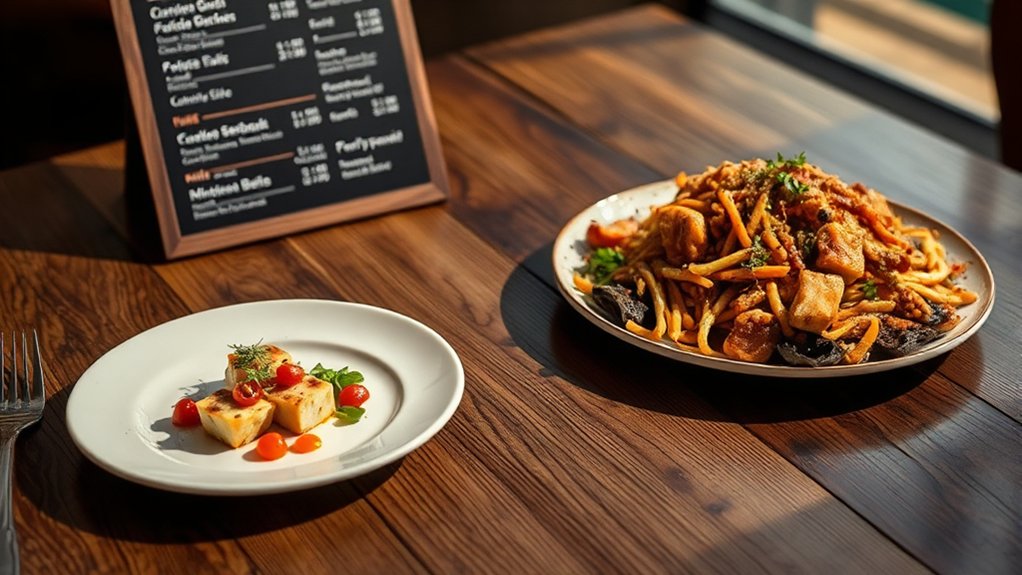
When you look at menu prices, keep in mind that portion sizes play a big role in cost. Larger servings require more ingredients, which naturally raises the price.
Understanding this helps you see why some dishes cost more than others based on how much food you get. It’s pretty simple once you think about it!
Portion Size Cost Impact
Although increasing portion sizes can make a menu item more appealing, it directly raises the cost of ingredients and preparation. When you offer larger servings, you’re using more raw materials, which means higher expenses.
Plus, bigger portions can increase cooking time and labor, adding to your overhead. You’ll need to balance these factors carefully to keep prices competitive without sacrificing quality.
If you don’t adjust your menu prices accordingly, your profit margins could shrink. On the other hand, smaller portions might lower costs but could leave customers feeling unsatisfied.
Understanding how portion size impacts the overall cost helps you price items fairly while managing customer expectations. This way, you guarantee your menu remains profitable and appealing.
Ingredient Quantity Pricing
Three key factors determine how ingredient quantities influence your menu pricing: the cost of raw materials, portion size adjustments, and supplier pricing tiers. When you increase portion sizes, you naturally use more ingredients, which raises your food cost per dish.
Conversely, smaller portions reduce costs but might affect customer satisfaction. Understanding raw material costs helps you pinpoint which ingredients impact your margins the most.
Adjusting portion sizes requires balancing customer expectations with profitability. Additionally, supplier pricing tiers can affect your ingredient costs; buying in bulk often lowers prices, allowing you to optimize portions without drastically increasing prices.
How to Compare Menu Items for Best Value
Why settle for a dish that doesn’t give you the most bang for your buck? When comparing menu items, focus on portion size, ingredients, and price.
Look beyond just the price tag—sometimes a slightly pricier dish offers more quality or quantity, making it a better deal overall. Use this simple comparison to decide:
| Menu Item | Price per Ounce ($) |
|---|---|
| Grilled Chicken | 0.75 |
| Veggie Pasta | 0.60 |
| Steak | 1.20 |
Here, veggie pasta offers the lowest cost per ounce, but consider your preferences and nutritional needs too. If you want protein, grilled chicken might be a better value despite a higher price per ounce.
Always ask about portion sizes and ingredients if they’re not listed. This way, you can make an informed choice that suits your budget and appetite perfectly.
How Seasonal and Local Ingredients Affect Prices
When you choose dishes made with seasonal and local ingredients, you’ll often notice a difference in price—and for good reason. Seasonal ingredients are harvested at their peak, which means they’re fresher, more flavorful, and often more affordable when in season.
However, when these ingredients are out of season, they become scarce or require costly imports, driving prices up. Local ingredients also impact pricing because sourcing them supports nearby farmers and reduces transportation costs.
This can sometimes lower menu prices, but at times, the focus on quality and sustainability may lead to slightly higher costs. When you opt for seasonal and local dishes, you’re not just paying for food—you’re investing in freshness, environmental benefits, and community support.
Understanding this helps you appreciate why some menu items cost more or less, depending on the time of year and where the ingredients come from. It’s a smart way to gauge value beyond just the price tag.
How to Use Specials and Deals to Save Money
To save money, you’ll want to spot the best specials and deals before you buy. Timing your purchases around sales can make a big difference in what you pay.
Let’s look at how to identify these opportunities and plan your shopping accordingly. It’s easier than you might think once you know what to watch for!
Identifying Best Deals
How can you make the most of specials and deals without spending extra time or effort? Start by focusing on items you regularly use or enjoy, so you’re not tempted into unnecessary purchases.
Compare unit prices to spot genuine bargains rather than just looking at discounts. Use apps or websites that aggregate deals, saving you the hassle of checking multiple sources.
Sign up for newsletters or loyalty programs to get exclusive offers directly. Don’t overlook combo deals or meal bundles—they often offer better value than buying items separately.
Finally, always double-check the deal’s terms and expiration dates to avoid surprises. With these steps, you’ll quickly identify the best deals and keep your spending smart and efficient.
Timing Your Purchases
Although specials and deals can seem appealing anytime, knowing the right moments to buy can maximize your savings considerably. Timing your purchases means staying alert to when prices drop and when stores offer the best promotions.
Here’s how you can make the most of it:
- Shop during off-peak hours or days when stores offer discounts to attract more customers.
- Take advantage of seasonal sales, like holiday or clearance events, to buy items at their lowest prices.
- Use apps or newsletters to track flash sales and limited-time offers that pop up unexpectedly.
- Plan your grocery trips around weekly specials, often released early in the week, so you can stock up smartly.
How to Spot Hidden Costs on Menus
Ever wondered why your bill sometimes ends up higher than the prices listed on the menu? Hidden costs often creep in unnoticed.
To spot them, start by carefully reading the fine print—look for notes about additional charges like service fees, gratuities, or taxes not included in the listed prices. Watch out for menu items marked with asterisks or symbols; these usually indicate extra costs for add-ons or substitutions.
Also, be cautious with combo deals or specials—they might exclude certain components or require purchasing extras. Don’t forget about mandatory charges such as cover fees or corkage if you bring your own drinks.
Some restaurants add a “plate charge” for sharing dishes or a “split fee” when you divide your meal. By staying alert to these details, you can avoid surprises and better understand what you’re really paying for before you order.
How to Adjust Your Order to Fit Your Budget
One simple way to keep your meal affordable is by customizing your order to match your budget. You don’t have to order the most expensive items to enjoy a satisfying meal.
Instead, try these tips:
- Choose smaller portions – Opt for half-sized or appetizer portions to reduce cost without sacrificing flavor.
- Skip extras – Hold the add-ons like cheese, bacon, or premium sauces that can quickly increase the bill.
- Share dishes – Splitting larger entrees or sides with a friend helps you both save money and avoid waste.
- Swap pricey sides – Replace expensive sides like fries or salads with more affordable options such as steamed veggies or rice.
How to Find Affordable Options for Dietary Needs
When managing dietary needs on a budget, you can still enjoy tasty meals by choosing budget-friendly options. Look for affordable ingredient substitutions that fit your restrictions without breaking the bank.
With a little planning, you’ll find it easier to stick to both your diet and your budget. It’s all about being smart with your choices and getting creative in the kitchen.
Budget-Friendly Dietary Choices
Although eating healthily on a budget can seem challenging, you can find affordable options that meet your dietary needs with a bit of planning. Start by knowing your nutritional priorities and focusing on versatile foods that fit your diet.
To help you stay on track without overspending, try these tips:
- Plan meals around seasonal produce, which tends to be cheaper and fresher.
- Buy in bulk for staples like grains, beans, and nuts to save money over time.
- Look for store brands or discounts on dietary-specific items, such as gluten-free or low-sodium products.
- Prepare meals at home to control ingredients and portions, reducing reliance on costly convenience foods.
Affordable Ingredient Substitutions
Finding affordable ingredient substitutions can make sticking to your dietary needs much easier without stretching your budget. When a recipe calls for pricey items, look for alternatives that provide similar nutrition or flavor.
For example, swap quinoa with brown rice or barley. Both are budget-friendly grains high in fiber. Instead of almond milk, try making your own oat milk at home—it costs less and reduces packaging waste.
If you need a plant-based protein, canned beans or lentils are affordable and versatile options compared to tofu or specialty products. Don’t overlook frozen vegetables—they’re often cheaper than fresh and just as nutritious.
Tips for Ordering Out Without Going Over Budget
Even if you love the convenience of ordering out, sticking to a budget doesn’t have to be a challenge. With a few smart strategies, you can enjoy your favorite meals without overspending.
Here are some tips to help you manage your expenses:
- Look for Deals and Coupons – Check the restaurant’s website or apps for discounts before placing your order. It’s an easy way to save without much effort.
- Choose Smaller Portions – Opt for appetizers or half-portions instead of full meals. This helps you save money and avoid waste.
- Skip Extras – Avoid add-ons like drinks, desserts, and sides. These little extras can quickly bump up your total bill.
- Order for Sharing – If you’re with friends or family, share larger dishes. It’s a great way to cut costs and try more variety.
Frequently Asked Questions
What Are Common Menu Design Trends in Different Cuisines?
You’ll notice common menu design trends vary by cuisine: Italian menus often use rustic fonts and warm colors to evoke coziness.
Japanese menus, on the other hand, favor minimalism with clean lines and simple layouts. It’s all about keeping things sleek and straightforward.
Mexican menus usually feature vibrant colors and playful typography to reflect lively culture. They really bring that energy to the table.
You’ll also see many menus incorporating high-quality food photos and clear sections. This makes it easier for you to navigate choices and feel excited about what’s next.
How Do Restaurants Decide Which Items to Feature as Chef’s Specials?
You decide which items to feature as chef’s specials by considering what’s fresh, seasonal, or unique to your kitchen. You’ll want to highlight dishes that showcase your chef’s skills or creativity, and that can excite customers.
Often, specials help test new recipes or ingredients without altering the main menu permanently. You also think about profitability and how the special fits your restaurant’s overall theme and customer preferences.
What Impact Do Menu Item Descriptions Have on Customer Choices?
When you read a menu, the way dishes are described can gently nudge your appetite like a warm breeze. Menu item descriptions have a powerful impact on your choices—they paint vivid pictures of taste, texture, and freshness, making certain options more tempting.
How Often Do Restaurants Typically Update Their Menus?
Restaurants typically update their menus every few months to keep things fresh and appealing. You’ll often see seasonal changes, new dishes, or adjustments based on ingredient availability and customer feedback.
Some places might do minor tweaks monthly, while others overhaul menus annually. If you’re curious, checking the menu regularly or asking staff can help you spot new favorites or special offers they’ve recently added.
What Technology Is Used to Create Digital or Interactive Menus?
You might think creating digital menus is just about fancy design software, but it actually relies on a mix of web development tools like HTML, CSS, and JavaScript. These are often paired with platforms like Canva or specialized menu apps.
These tools let you easily update content and add interactivity. Plus, QR codes link customers directly to the menus on their phones, making the experience seamless and tech-savvy.
No need for a printout every time, which is pretty convenient, right?
Conclusion
Next time you unfold a menu, picture it as a treasure map—each price and description a clue guiding you to your perfect meal. By spotting hidden costs and understanding portion sizes, you’ll navigate with confidence.
You’ll savor every bite without worry. Imagine the satisfaction of ordering just right, fitting your budget while enjoying flavors that dance on your tongue.
With these tips, dining out becomes a joyful adventure, not a financial puzzle.