Chili Restaurant Menu Prices: Quick Ordering Guide
You’ll typically pay between $6 and $12 for chili, with classic beef options averaging 10 to 16 ounces.
Vegetarian and vegan choices, often priced similarly, range from $7 to $12 and include bean or tofu varieties.
Combo meals with sides and drinks cost around $8 to $12, offering good value.
Add-ons like cheese or jalapeños usually cost $0.50 to $2.
Prices do vary by region and style, so keep exploring to find the best options and deals.
It’s always fun to try something new and see what suits your taste!
Key Takeaways
- Classic beef chili prices range from $6 to $12, with portion sizes between 10 to 16 ounces depending on the restaurant type.
- Vegetarian and vegan chili options cost between $7 and $12, often featuring beans, vegetables, tofu, or tempeh.
- Combo meals including chili, a side, and a drink typically cost $8 to $12, offering a balanced and convenient option.
- Popular add-ons like shredded cheese or sour cream cost $0.50 to $1, while sides such as cornbread usually range from $2 to $3.
- Chili prices vary regionally, with urban areas and high-demand regions charging more, typically $6-$9 in the Southwest and $7-$10 in the Northeast.
So, if you’re in a busy city, expect to pay a bit more. But no matter where you are, there’s usually a tasty chili option that fits your budget!
What’s on a Chili Menu?
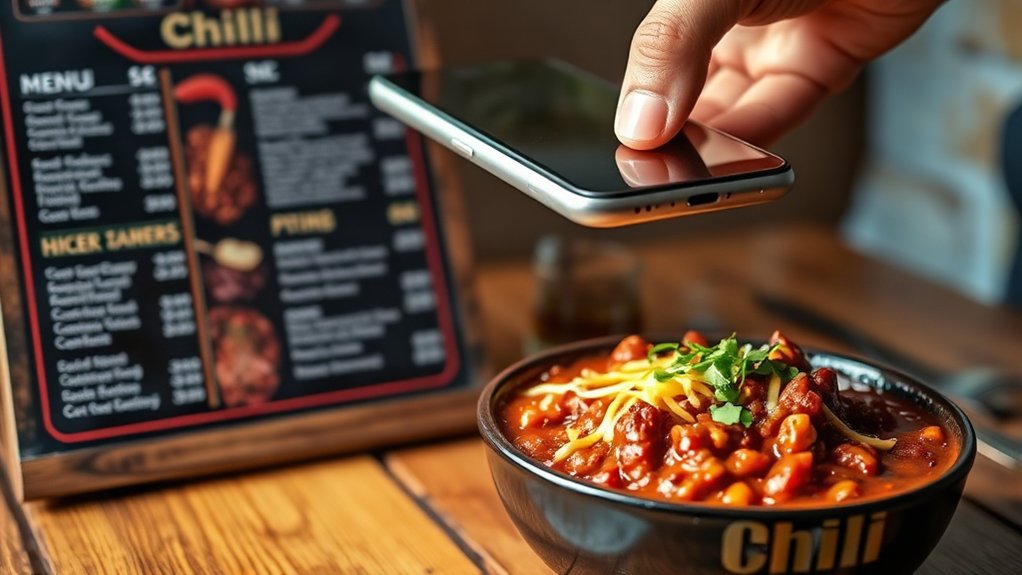
When you look at a chili menu, you’ll usually find a variety of chili styles, from classic beef chili to vegetarian and spicy options. You might see chili made with different proteins like turkey, chicken, or even pork.
Many menus include a vegetarian chili, often packed with beans, vegetables, and flavorful spices. If you like heat, spicy chili options with jalapeños or hot sauce are common.
Alongside the chili itself, menus often list toppings like shredded cheese, sour cream, onions, and jalapeños, so you can customize your bowl. Some places offer chili as a standalone dish, while others serve it over rice, hot dogs, or fries for a heartier meal.
You’ll also find sides like cornbread, tortilla chips, or salads to complement your chili. Don’t be surprised to see different portion sizes or combo meals that pair chili with drinks or sides, making it easy to pick exactly what you want without hassle.
Classic Beef Chili: Average Prices and Portions

Although classic beef chili is a staple on many menus, you might notice prices and portion sizes vary depending on the restaurant. Typically, a bowl of this hearty dish ranges from $6 to $12, influenced by factors like location and ingredient quality.
Portions usually fall between 10 to 16 ounces, enough to satisfy a hungry appetite without being overwhelming.
When ordering classic beef chili, consider these points:
- Price Range: Expect to pay around $8 to $10 at casual spots, while upscale places might charge closer to $12.
- Portion Size: Most servings come in 12- to 16-ounce bowls, offering a filling meal.
- Add-Ons: Extras like cheese, sour cream, or cornbread can add $1 to $3, enhancing your experience but increasing the total cost.
Knowing this, you can better gauge what to expect and choose a dish that fits your appetite and budget.
Vegetarian and Vegan Chili Options and Costs
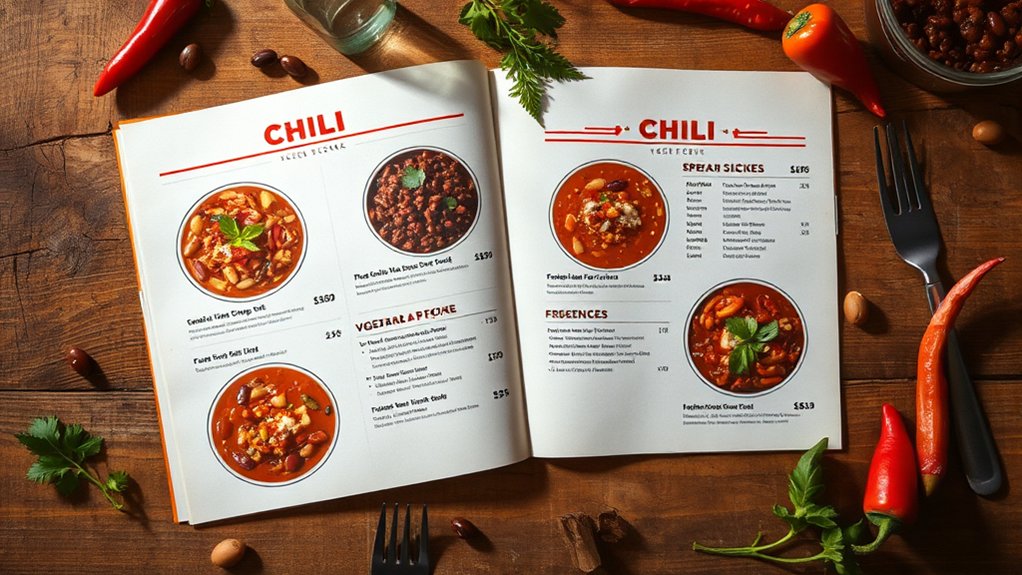
If you’re looking for meat-free options, vegetarian chili often features beans, vegetables, and spices that pack plenty of flavor.
Vegan chili tends to be priced similarly, usually ranging from $7 to $12 depending on the restaurant. Knowing these options can help you find a tasty chili that fits your diet and budget.
Popular Vegetarian Chili Varieties
Since plant-based diets are gaining popularity, many chili restaurants now offer a variety of vegetarian and vegan chili options that don’t compromise on flavor or texture. You’ll find these popular varieties appealing whether you’re fully vegetarian or just looking to try something new.
Here are three popular vegetarian chili varieties you might see on menus:
- Three-Bean Chili – Packed with kidney, black, and pinto beans, this chili is hearty and rich in protein.
- Lentil Chili – Using lentils as the base, it offers a meaty texture and absorbs spices beautifully.
- Vegetable Chili – Loaded with bell peppers, corn, tomatoes, and zucchini, this variety is colorful and nutrient-dense.
These options often come at competitive prices, making them a great choice if you want flavor without meat. Give them a try—you might just find a new favorite!
Vegan Chili Price Range
Vegetarian chili options like the three-bean or lentil varieties have become staples on many menus, but you might be wondering how their prices compare, especially when it comes to vegan chili choices.
Vegan chili usually swaps out dairy or meat-based ingredients for plant-based alternatives, which can slightly affect the price. Typically, you’ll find vegan chili priced between $7 and $12, depending on the restaurant and portion size.
Some places use specialty ingredients like tofu or tempeh, which might push the cost higher. However, many eateries keep prices similar to vegetarian options to stay competitive.
If you’re aiming for budget-friendly vegan chili, casual spots often offer deals or smaller portions around $7-$9. Meanwhile, more upscale restaurants might charge $10-$12 for gourmet versions.
Chili Combo Meals and Value Deals
When you’re craving a hearty meal without breaking the bank, chili combo meals and value deals offer the perfect solution. These options bundle chili with sides or drinks, giving you more for less.
They’re ideal when you want a filling, balanced meal without the hassle of ordering multiple items separately.
Here are three common types of chili combo deals you’ll find:
- Chili with a Side and Drink – Often includes chili paired with fries or a salad and a soda, usually priced around $8 to $12.
- Chili Dog Combos – Combines a chili-topped hot dog with chips or fries and a drink, typically costing $7 to $11.
- Family or Party Packs – Larger portions of chili with sides and sometimes bread, designed to feed multiple people, usually ranging from $20 to $35.
Popular Chili Add-Ons and Their Prices
When you order chili, adding toppings like cheese, onions, or jalapeños can really elevate the flavor. These common add-ons usually cost just a dollar or two each.
But some specialty options might be a bit pricier. Let’s check out the typical choices and what you can expect to pay for them.
Common Chili Toppings
What makes a bowl of chili truly your own? It’s the toppings you choose to add that customize each bite. Whether you like it spicy, creamy, or crunchy, common chili toppings let you tailor your meal exactly how you want it.
These add-ons usually come at a small extra cost but make a big flavor difference.
Here are three popular chili toppings you’ll often find on menus:
- Shredded Cheese – Adds richness and melts perfectly into hot chili, typically costing around $0.50 to $1.00.
- Sour Cream – Offers a cool, tangy contrast, priced about $0.50 to $1.00.
- Chopped Onions – Bring a fresh crunch and sharpness, usually $0.25 to $0.75.
These simple extras let you enjoy chili your way!
Price Range Overview
You’ll find that chili add-ons typically range from just a quarter to a few dollars each, depending on the ingredient and restaurant. Simple extras like shredded cheese, diced onions, or a dollop of sour cream usually cost between $0.25 and $1.
More substantial add-ons, such as jalapeños, avocado slices, or extra beans, tend to be priced around $1 to $2. If you want to boost your chili with a side of cornbread or a small salad, expect to pay closer to $2 to $3.
Prices vary based on portion size and location, but these ranges give you a solid idea of what to expect. Knowing this helps you customize your chili without surprising your wallet at the register.
Specialty Add-On Options
Many chili lovers enjoy customizing their bowls with specialty add-ons that bring unique flavors and textures. These extras let you tailor your chili experience exactly how you like it, often for a small additional cost.
Here are some popular add-ons you might find on the menu:
- Cheese – Shredded cheddar or a cheese blend typically costs around $0.75 to $1.25. It adds a creamy, rich layer to your chili.
- Sour Cream – For about $0.50 to $1.00, sour cream adds a tangy, cooling contrast to the spicy chili.
- Jalapeños – Fresh or pickled jalapeños usually run $0.50 to $1.00. They offer a spicy kick that complements the dish perfectly.
These options let you customize your bowl without breaking the bank. So go ahead, mix and match to find your perfect chili combo!
How Portion Sizes Impact Chili Costs
Although larger portions may seem like a better deal, they often come with a higher price tag that reflects the extra ingredients and preparation time. When you order a bigger bowl of chili, you’re not just paying for more meat and beans—you’re also covering the added spices, toppings, and the longer cooking process needed to maintain flavor and quality.
Choosing a smaller portion can save you money and help control your calorie intake. But if you’re really hungry, a larger size might be worth the extra cost.
Some restaurants price their portions incrementally, while others charge a flat rate with portion size upgrades. Keep in mind that the cost per ounce usually decreases with larger sizes, but the overall price still rises.
Ultimately, understanding how portion sizes impact chili costs helps you make smarter choices that fit your appetite and budget. So next time you order, think about how much chili you really want before deciding on the size.
Chili Price Differences by Region
You’ll notice chili prices can vary a lot depending on where you are. Factors like local ingredients, labor costs, and regional tastes all play a role in shaping the menu price.
Let’s explore how these differences affect this popular dish across various areas. It’s pretty interesting to see how something as simple as chili can change from place to place.
Regional Price Variations
When you’re comparing chili prices across different regions, you’ll notice some significant variations that reflect local tastes, ingredient availability, and economic factors. These differences can influence how much you end up paying at your favorite chili spot.
- Urban vs. Rural Areas – Cities often have higher prices due to increased overhead costs and demand. Meanwhile, rural areas might offer more affordable options.
- Regional Ingredient Sourcing – Regions with easy access to fresh ingredients, like Texas or the Southwest, may have lower prices. On the other hand, places that import specialty items might charge more.
- Local Preferences – Some regions prefer spicier or meat-heavy chili, which can raise prices. Others favor simpler recipes that keep costs down.
Understanding these variations helps you make smarter choices when ordering chili across the country. So, next time you’re checking out the menu, keep these factors in mind!
Factors Influencing Costs
Because chili prices vary so much by region, several key factors play a role in determining what you’ll pay. First, ingredient costs differ depending on local availability and seasonality—meat, beans, and spices might be cheaper or pricier where you live.
Labor expenses also impact prices; areas with higher wages often charge more for dishes. And then, rent and overhead costs for restaurants fluctuate widely by location, which influences menu pricing.
Taxes and regulations unique to each region can add to the final cost as well. Plus, demand and competition shape prices—if chili is a local favorite, you might find higher prices because it’s popular or, on the flip side, better deals from lots of competitors.
Popular Menu Item Pricing
Although chili is a beloved dish across the country, the price you pay can differ greatly depending on where you are. Regional ingredients, local demand, and restaurant type all influence how much popular chili menu items cost.
When ordering, keep these regional price differences in mind:
- Southwest U.S. – Expect prices around $6 to $9, thanks to fresh local chili peppers and authentic recipes.
- Midwest – Prices usually range from $5 to $8; hearty, meat-heavy chili is common here, affecting cost.
- Northeast – You might pay $7 to $10, as specialty chili varieties and higher operating costs increase prices.
Knowing these variations helps you anticipate what your favorite chili dish might cost wherever you dine.
Specialty Chili: What You Should Know
If you’re new to specialty chili, you might be surprised by how many unique ingredients and flavor profiles come into play. Specialty chili goes beyond the classic beef and beans, often featuring unusual meats like bison, venison, or even seafood.
You’ll find diverse spices such as smoked paprika, chipotle, or cocoa powder that layer depth and complexity into the dish. These chilis might also include creative add-ins like roasted vegetables, exotic peppers, or unique toppings such as avocado or queso fresco.
When ordering specialty chili, keep in mind that these premium ingredients usually mean a higher price compared to standard options. But you’re paying for a richer, more distinctive taste experience.
Also, specialty chili recipes often cater to different dietary preferences, including vegetarian or gluten-free versions. Knowing what makes these chilis stand out helps you appreciate their value and guides you toward a dish that perfectly suits your palate.
Customizing Your Chili Without Breaking the Bank
When you want to customize your chili without overspending, focusing on simple additions can make a big difference. You don’t have to load up on expensive extras to make your dish more enjoyable.
Small, affordable tweaks can enhance flavor and texture without pushing your budget.
Here are three budget-friendly ways to personalize your chili:
- Add basic toppings like shredded cheese, onions, or sour cream. These are usually low-cost but pack a flavorful punch.
- Choose beans or rice as fillers. They bulk up your meal, making it more filling and cost-effective.
- Opt for mild spice boosts with jalapeños or hot sauce packets. These add zing without extra charges.
Smart Tips to Order Chili on a Budget
Since chili can vary widely in price depending on the restaurant and ingredients, knowing how to order smartly can save you money without sacrificing taste. First, look for smaller portion sizes or side servings—they’re often cheaper but still satisfying.
Next, consider ordering chili during lunch specials or happy hours when prices are usually lower. Don’t hesitate to ask if the restaurant offers combo deals with chili and a side; these can be more budget-friendly than ordering items separately.
Also, keep an eye out for daily specials or chili-themed promotions. When customizing, choose toppings wisely—extras like cheese or sour cream can add up quickly.
Instead, opt for free or low-cost add-ons like onions or jalapeños. Finally, if you’re dining with friends, sharing a large chili and splitting the cost can be a smart way to enjoy more variety without spending more.
Following these tips helps you enjoy delicious chili without stretching your wallet.
Frequently Asked Questions
What Are the Healthiest Chili Toppings to Choose?
The healthiest chili toppings you can choose are fresh vegetables like diced tomatoes, onions, and bell peppers. You might want to add a bit of avocado for healthy fats and some chopped cilantro for flavor without extra calories.
Skip heavy cheeses and sour cream or opt for small amounts of low-fat versions. Beans and a sprinkle of chili powder or cumin can boost nutrition and taste without adding unhealthy fats or sugars. Easy, right? Just a few simple swaps can make your chili both tasty and healthy!
How Is Chili Typically Prepared in Different Cultures?
Chili varies a lot depending on where you are. In the U.S., it’s often a hearty stew with beef, beans, tomatoes, and spices.
In Mexico, you might find chili with fresh peppers, corn, and beans, sometimes without meat. It’s a bit lighter and fresher over there.
In Texas, it’s usually meat-heavy with no beans. They like to keep it simple and focused on the beef.
You’ll see Indian versions adding spices like cumin and garam masala. And in some Asian countries, chili can be a spicy, tangy sauce or stew with local ingredients. It’s pretty cool how it changes from place to place!
What Are Common Allergens Found in Chili Ingredients?
You know what they say, “Better safe than sorry.” When you’re enjoying chili, watch out for common allergens like beans, which can cause reactions in some people.
Dairy, often used in toppings like cheese or sour cream, is another culprit. Some recipes include nuts or soy-based ingredients, and spices like chili powder might sometimes contain traces of allergens.
Always check ingredient lists or ask to avoid any unpleasant surprises. It’s better to be cautious than to have your meal spoiled by an unexpected reaction!
Can I Order Chili for Large Group Catering?
Yes, you can definitely order chili for large group catering. Many chili restaurants offer bulk or family-sized portions perfect for gatherings.
Just check with the restaurant ahead of time to confirm availability and customize your order based on dietary needs or spice preferences. It’s a convenient, crowd-pleasing option that’s easy to serve.
Don’t forget to ask about sides and toppings to complete the meal for your group!
What Beverages Pair Best With Different Chili Types?
You’ll want to match your beverage to the chili’s flavor and heat. For spicy chili, try a cold beer or a sweet iced tea to cool things down.
Milder chili pairs well with a light lager or a crisp white wine. If your chili has smoky or rich flavors, a bold red wine or a dark stout can complement it nicely.
Don’t forget classic soda or lemonade for a revitalizing contrast! They’re simple but always do the trick.
Conclusion
So, when you’re craving chili, you don’t have to break the bank or settle for less. With a little savvy ordering, you can enjoy hearty flavors without the wallet ache.
Whether you go classic, plant-based, or immerse yourself in combos, there’s a budget-friendly option waiting for you. Just remember, a few smart tweaks can turn your chili experience from “just okay” to simply unforgettable.
Enjoy your meal without the financial fuss!